Alignment is one of the many things that can be wrong on your car without a warning light, a noise, or a check engine code, so you can go a long time without knowing. There are things to look for, though, and most of them show up in your tires. This is what we tell Phoenix drivers to watch for, and why Valley roads knock alignment out so often.
Most of what goes wrong with a car lets you know about it somehow. Brakes squeal when the pads get low, and a weak battery cranks slow on a cold morning. Alignment is one of the many things that can be wrong without a warning light, a noise, or a check engine code. A car can sit well out of spec for a year, drive more or less normally, and still drag a set of tires sideways down the road a fraction of an inch at a time.
A lot of people find out at the tire shop, when tread that should have lasted another couple of years is gone on one edge. Nothing about the car told them to come in sooner, so what they end up paying for is tires, and a lot of drivers do not connect that bill back to the alignment.
There are things to look for, though. Most of them show up in the tires, and the rest you feel through the steering wheel. It helps to know what they are before you are the one buying tires early.
Alignment Is a Set of Angles
People talk about alignment like it's one adjustment, the way you'd top off tire pressure. It's really a set of angles that describe how your wheels sit against the road and against each other, and each of them causes a different problem when it drifts.
- Toe, whether the wheels point slightly toward or away from each other, looking down at them from above. Toe is usually what eats tires the fastest, because the wheel gets scrubbed sideways across the pavement every foot you drive.
- Camber, the inward or outward tilt of the wheel as you look at it from the front. Too much camber puts the load on one shoulder of the tire, so that edge wears out while the rest of the tread still looks healthy.
- Caster, the tilt of the steering axis. You feel this one more than you see it. A car that wanders, feels vague at freeway speed, or doesn't come back to center on its own after a turn is often a caster issue.
These angles get measured in fractions of a degree, which is why a car can be well out of spec and still feel normal to drive.
Why Valley Roads Knock Alignment Out So Often
Alignment doesn't usually drift on its own. Something moves it, and there's plenty around the Phoenix metro that will.
- Potholes that open up after monsoon storms, water gets under asphalt that has been baking all summer, traffic does the rest, and you get a broken edge where the road was fine a week earlier.
- Construction plates, lane shifts, and seams, freeway work around the Valley means steel plates, uneven lane transitions, and hard expansion joints taken at speed.
- Curbs in tight lots, this is the one we see most. Clipping a curb while parking is enough to move a toe setting, and it hardly ever feels like a big deal at the time.
- Ordinary suspension wear, as bushings, ball joints, and tie rod ends age, the geometry they're holding starts to move under load. Our heat is hard on rubber bushings, so this tends to show up earlier on a Valley car than the mileage alone would suggest.
Potholes are not just a local complaint, either. AAA looked into this in 2023 and found that about 44 million drivers nationwide paid for pothole damage in a single year, at an average repair bill of $406. Not all of that is alignment work, but it gives you a sense of how much damage the roads are doing.
Fixing those roads adds its own hazards for a while. The city has more than 320 miles of streets slated for maintenance in fiscal year 2026, which is good news for the long run and a lot of steel plates, lane shifts, and fresh curbs to get around in the meantime.
What our heat does to a tire that's already scrubbing
We want to be straight about this one. Hot weather by itself doesn't move your alignment angles. It does change how fast the tire gives up. A tire that's being dragged sideways is already building extra heat, and Valley pavement in summer runs a lot hotter than the air temperature, so tread that would wear slowly in a mild climate comes off quicker here.
Signs Your Alignment Is Off
Any one of these is easy to brush off by itself. If you notice a couple of them together, it's worth having the alignment checked.
- The car pulls to one side on a flat, straight road when you relax your grip for a second
- The steering wheel sits off-center while the car is going straight
- You're making constant small corrections just to hold your lane
- The steering doesn't come back to center after a turn the way it used to
- One edge of a tire is worn down while the rest of the tread looks healthy
- A tire feels feathered or saw-toothed when you run your hand across the tread
- The car feels vague or floaty at freeway speed but fine around town
The crooked wheel is the one we hear about most. Your steering wheel is not supposed to tell time. If the car is tracking straight down 7th Street and the wheel is sitting at 11 o'clock, something moved, even if everything else about the drive feels fine to you.
Check the cheap explanations first
Before you assume it's alignment, check your tire pressures while the tires are cold, and go by the figure on the driver door jamb sticker instead of the number on the sidewall. One low tire will pull the car in a way that feels just like misalignment. Pressure also moves with temperature, roughly 1 PSI for every 10 degrees, so tires set on a 110 degree afternoon can read low on a January morning. Roads are also built with a crown so water runs off them, so a slight drift to the right in a crowned lane is normal.
What It Actually Does to Your Tires
This is where the money goes. A tire is built to roll in the direction it's pointed. Point it a little wrong and every rotation drags rubber sideways across the pavement, and rubber that gets dragged like that comes off.
What the wear pattern tells us
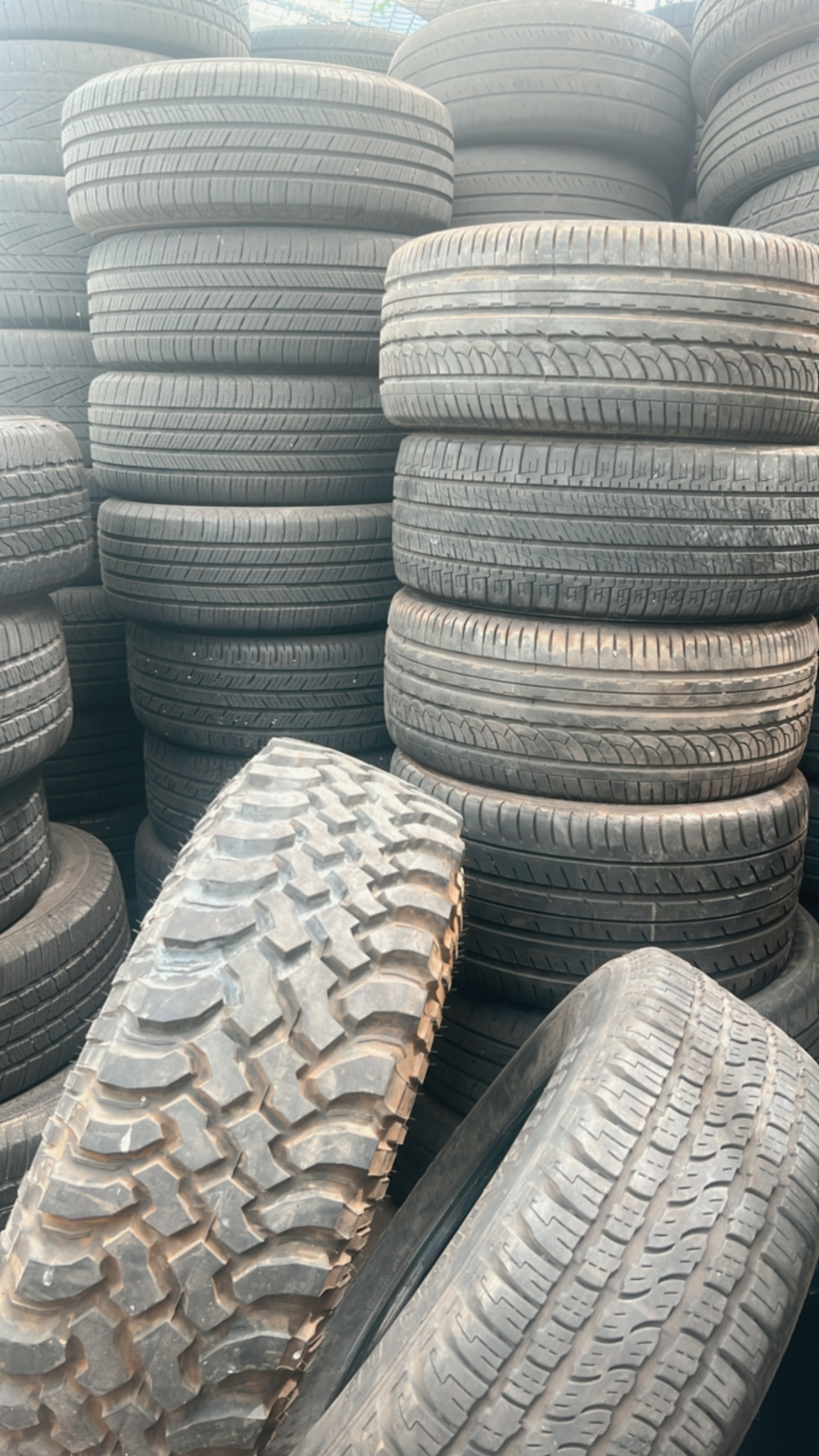
- Feathered or saw-toothed tread, smooth one way and sharp-edged the other when you run your hand across it. That's a classic toe problem, and your hand usually finds it long before your eyes do.
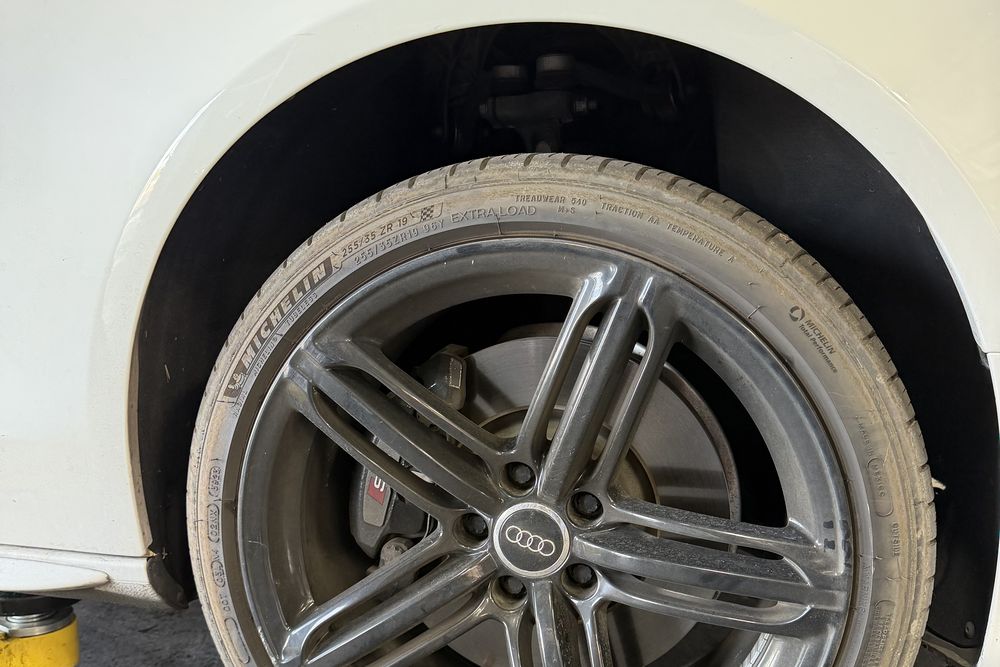
- One shoulder worn, the rest fine, usually camber. Inner-edge wear is the one people miss, since the worn side is facing away from you in the driveway.
- Both outer edges worn evenly, more often from running the tires low on air than from alignment, and that's a cheaper fix.
- Cupping or scalloped dips around the tread, usually worn shocks or struts, or a wheel that's out of balance, rather than alignment. That's why we read the wear instead of guessing at it.
A ten second check you can do in your driveway
Once a month, with the engine off and the wheels straight, run your palm flat across the tread of each front tire, including the inner edge you can't see from where you're standing. You're feeling for one edge sitting noticeably lower than the other, or a sharp saw-tooth texture. That will catch alignment problems well before the tire looks bad.
Does Bad Alignment Hurt Your Gas Mileage?
It does, though less than most people expect. A misaligned wheel is partly fighting the direction the car is going, which raises rolling resistance and makes the engine work a little harder. It's a bit like driving around with the brakes dragging slightly.
The penalty is small enough that most drivers wouldn't pick it out from the normal week-to-week swing that comes from traffic, running the A/C, and how you drive. The tire bill is the expensive part of this by a long way.
Is It Safe to Keep Driving?
That depends on how far out of spec it is and on what put it there. A toe setting slightly out of spec isn't an emergency. The car drives normally and what you're losing is tread life, so get it corrected when it suits your schedule instead of tonight.
A car that pulls hard, wanders, feels unstable, or changed how it drives all of a sudden is a different situation. Those symptoms can come from a bent steering or suspension part, a damaged wheel, or a tire that's coming apart on the inside, and none of those get better with another week of driving.
After a hard impact, get it inspected before you keep driving
If you hit a pothole, a curb, or road debris hard enough that the steering wheel is now off-center, the car darts or pulls hard, or you hear a new clunk or feel a vibration, stop driving and have it inspected. The same hit that moves alignment can bend a control arm, damage a tie rod, or crack a wheel. Call Central Car Care at (602) 905-1204, tell us what happened, and we'll let you know whether it's reasonable to drive in or safer to have it towed.
One more thing while we're here. You'll find advice online about adjusting your own tie rod ends to chase down a pull, and we'd steer you away from that. Those are steering components, and setting them by eye can leave the car handling in a way you don't expect during the one emergency maneuver where it really matters.
Alignment, Balance, and Worn Parts Are Three Different Problems
These three terms get used interchangeably at the counter, and mixing them up is how people end up paying for the wrong service. From the driver seat they feel like three different things.
- Alignment shows up as a pull, or a steering wheel that sits crooked, or tread that wears unevenly across the width of the tire.
- Balance shows up as a shake, usually in a certain speed range, often around freeway speed, and then it smooths back out. That one comes from how weight is distributed around the wheel.
- Worn parts show up as play, clunks over bumps, a loose feeling in the steering, or a car that won't hold an alignment for long after it has been set.
That last one is what costs people money twice. We can only set the angles accurately on a vehicle whose steering and suspension components are tight. If a tie rod end or a ball joint has play in it, the geometry moves as soon as the car gets loaded up and driven, and the alignment you just paid for is gone. So we inspect before we adjust.
Jeep Maintenance and Ram Truck Repair in Phoenix
A good share of what rolls through our bays wears one of those badges, and with these trucks the front end is usually where the attention goes. A few of their alignment habits are worth knowing about.
- A lift or a bigger tire size, moves the suspension geometry, so the angles the factory set are no longer the ones you are driving on. If you have lifted a Jeep or gone up a tire size, have the alignment set as part of that job instead of waiting to see how it drives.
- Trail use, is hard on steering parts. Rocks, ruts, and washboard load the front end in ways pavement does not, and the same hit that pushes the angles out can bend a tie rod or a track bar. After a rough weekend it is worth a look underneath rather than just a glance at the tires.
- Solid front axle Wranglers and Gladiators, have their own wear points. The track bar, tie rod ends, ball joints, and steering stabilizer all wear, and when they do you get wander at speed or the hard shimmy people call death wobble. An alignment by itself will not settle that down, so this part of Jeep maintenance means finding the worn part and replacing it first. The angles get set after that.
- Towing and hauling, are hard on the front end. A heavy load changes ride height while it is on the truck, and over time it works the steering and suspension parts harder than everyday driving does. Most of the Ram truck repair work we see after a long towing season starts with a front end inspection, so have yours looked over after a stretch of heavy use instead of waiting for the tires to tell you.
- Short sidewalls, show trouble early. The wide, low-profile tires on a Charger or a Challenger have very little sidewall to soak up a pothole, so a hit that a taller tire would shrug off reaches the wheel and the suspension instead. A fair amount of the Dodge repair work we do on those cars traces back to one bad hole, so treat a solid impact as a reason to get the car looked at.
None of this is exotic work. Ram repairs on a high-mileage truck usually come down to the same tie rod ends, ball joints, and bushings that wear out on anything else, and the alignment is what finishes the job once the worn parts are off the vehicle. If you are not sure where your truck or your Jeep sits, we can put it on the rack and show you the numbers.
When to Have Alignment Checked
- 1
After any hard impact
a bad pothole, a curb strike, or road debris. This is the most common reason and the easiest one to talk yourself out of, since the car usually still drives fine afterward.
- 2
When you buy new tires
checking the angles before new tread goes on protects the money you just spent. Putting new tires on a misaligned car is how a set wears out early.
- 3
Whenever steering or suspension work is done
replacing tie rods, a rack, control arms, or struts changes the geometry, so the alignment belongs with the repair instead of being left for later.
- 4
On a routine interval
a lot of manufacturers suggest a check around once a year or somewhere near every 12,000 miles, and your owner manual is the authority for your vehicle. Rough roads are a reason to look sooner.
- 5
As soon as tire wear looks or feels uneven
by then it's already costing you money, and once a tire is worn into the cords on one edge, an alignment won't bring that tread back.
How We Approach It at Central Car Care
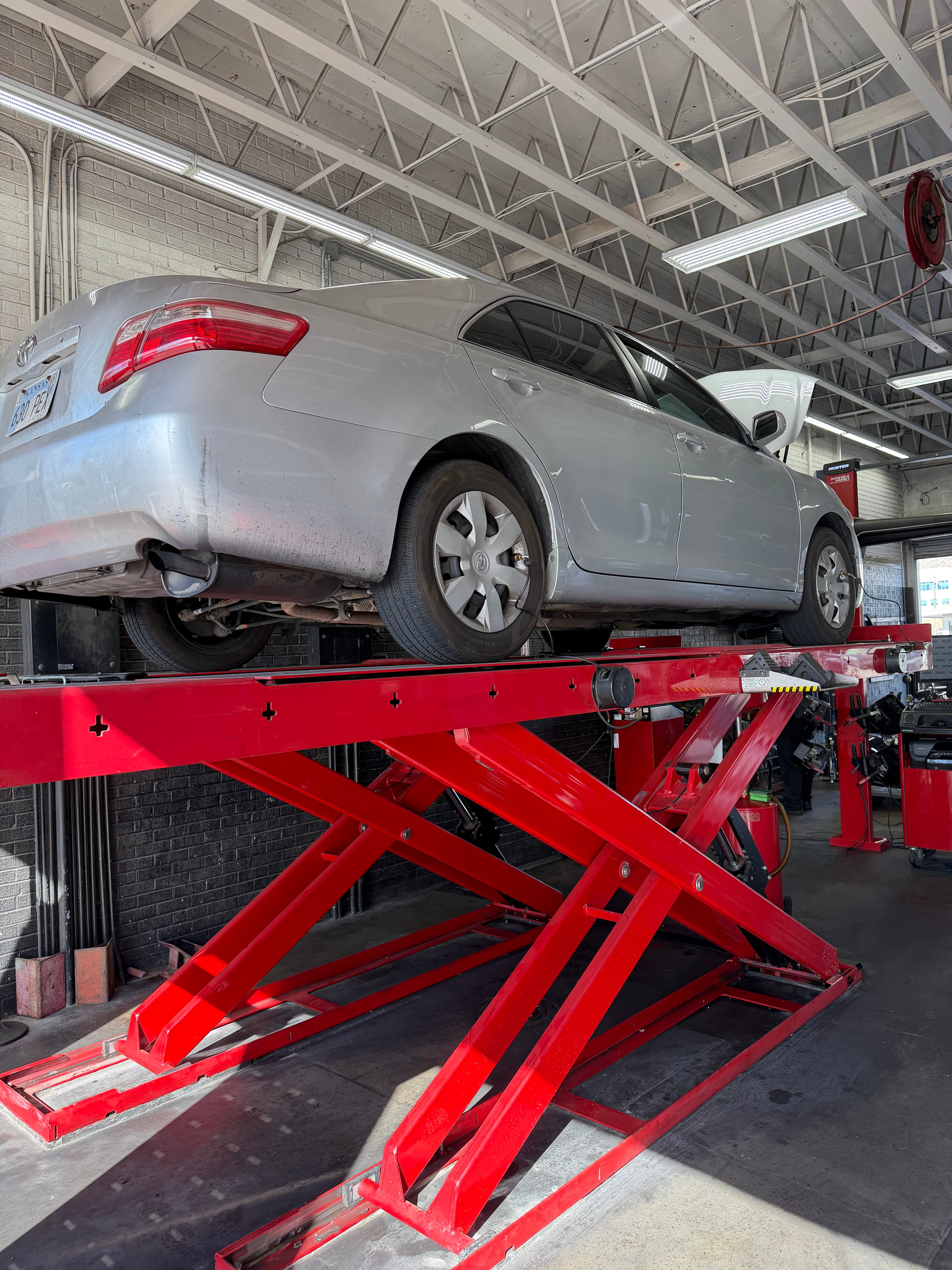
A pull tells us something is wrong, but it doesn't tell us what. Plenty of different faults will make a car pull, so most of the useful work happens before anything gets adjusted.
- We read the tire wear first, the wear patterns say a lot about what the vehicle has been doing, including problems that turn out not to be alignment at all.
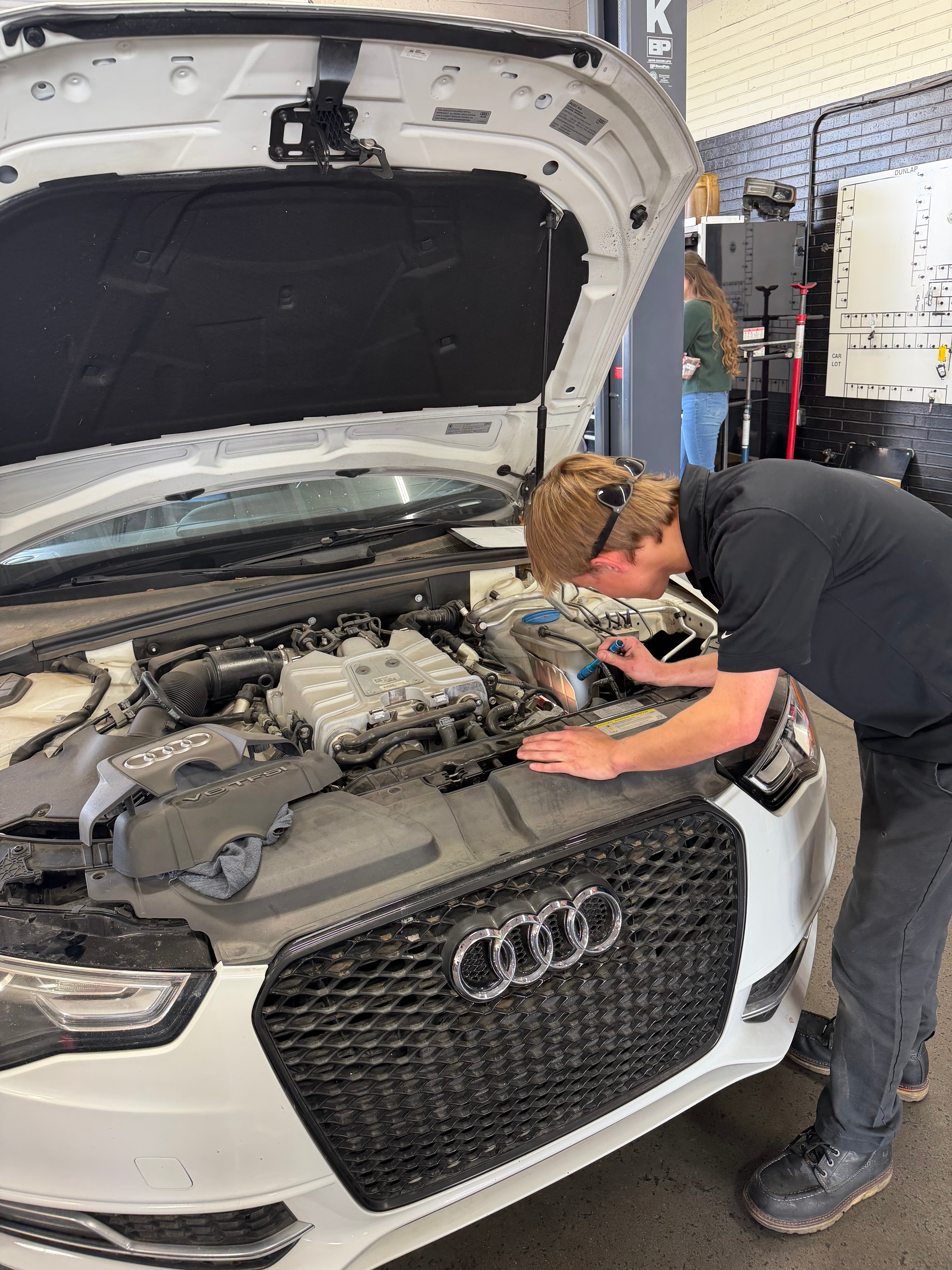
- We check for play in the steering and suspension, tie rod ends, ball joints, and bushings. Angles set on worn parts won't hold, and you'd just be back in here again.
- We give you the measured numbers, the actual readings, so you can see what was out of spec and by how much instead of taking our word for it.
Our ASE Certified technicians work on domestic, European, and Asian vehicles, and our repairs are backed by our 2-Year / 24,000-Mile Warranty. If your car is pulling, your steering wheel is sitting crooked, or your tires are wearing unevenly, bring it by 301 E Dunlap Ave in Phoenix or give us a call at (602) 905-1204.
The Bottom Line
Bad alignment rarely forces your hand. There's usually no light and no particular day where it turns urgent, so it sits there wearing a set of tires out early. In a climate that's already hard on rubber, that adds up to real money.
Most of the fix is just paying attention. Run your hand across the tread once a month, take curb strikes seriously instead of shrugging them off, have the angles checked when new tires go on, and treat a sudden change in how the steering feels as a reason to bring the car in instead of something to get used to.
Car Pulling or Chewing Through Tires in Phoenix?
Our ASE-certified technicians will pinpoint the actual cause, not guess at it, and back the repair with our 2-Year / 24,000-Mile warranty. Free estimates, always.