Fuel Tank Repair & Replacement in Phoenix, AZ
A fuel tank rarely fails all at once. It weeps at a seam, rusts through from the inside after years of condensation, or the sending unit stops reporting a level you can trust. Any of those is worth dealing with quickly, because raw fuel under a hot vehicle is not a problem that improves on its own.
Signs You Need Fuel Tank Repair Service
- A strong fuel smell, especially after filling up or when parked
- A fuel gauge that reads empty on a full tank, sticks, or swings
- Damp spots or drip marks under the rear of the vehicle
- Fuel economy that drops with no change in how you drive
- A check engine light for an evaporative emissions leak
What We Do
- Pressure test the tank and the evaporative system to find the actual leak point rather than guessing
- Inspect straps, seams, the filler neck and the vent lines, which fail more often than the tank itself
- Replace the fuel pump module or level sending unit when the tank is sound and only the unit has failed
- Drain and dispose of contaminated fuel safely, then clean the system before refilling
- Replace the tank where corrosion or impact damage makes repair the wrong call, and tell you plainly which it is
How We Diagnose It
The order matters. Most of these steps exist to rule out a cheaper cause before anyone quotes you the expensive one.
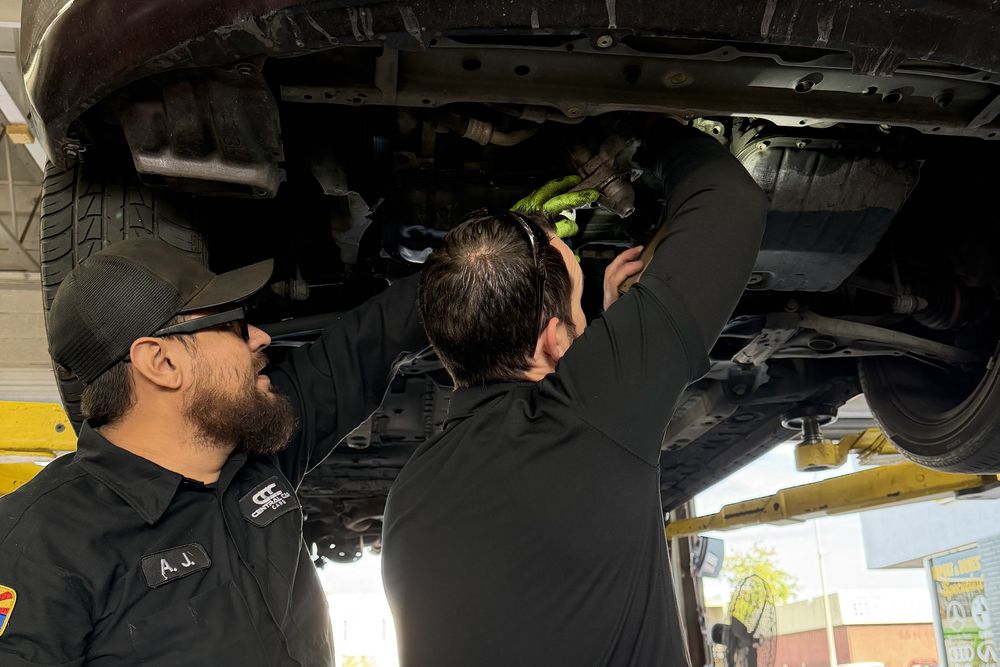
- Put the vehicle on the lift and look, because a fuel leak usually leaves a trail and the trail tells you where it started.
- Smoke test the evaporative system. Introduced under low pressure, smoke finds the escape point in minutes where a visual check can miss a pinhole for an hour.
- Check the filler neck, the vent lines and the strap mounts before the tank itself, since those fail far more often and cost far less.
- Read the fuel level sending unit against the actual level in the tank, which is how you separate a gauge complaint from a tank complaint.
- Pressure test the tank only once the cheap causes are ruled out.
What Drives the Cost
We are not going to put a price on this page, because the honest answer depends on your vehicle and we would rather quote you than guess in public. These are the things that actually move the number, so you know what we are looking at.
- Whether the tank itself has failed or only a seal, strap, filler neck or sending unit. These are very different jobs.
- Whether the fuel pump module has to come out, since on many vehicles it is inside the tank and the labor overlaps.
- How much fuel is in the tank when it arrives. A full tank has to be safely drained and stored first.
- Plastic or steel. Steel tanks rust from the inside and are more often replaced outright.
- Access. On some vehicles the tank drops in twenty minutes; on others the exhaust and a subframe come out first.
What Happens If You Wait
A fuel leak is the one item on this page we would ask you not to wait on. Fuel vapor under a hot exhaust is a fire risk, and it is not a risk that announces itself gradually. A failed sending unit, by contrast, is an inconvenience rather than a hazard, and can reasonably wait until it suits you. If you can smell fuel, treat it as today.
Why This Matters in Phoenix
Sustained heat raises vapor pressure inside the tank and works the evaporative system harder than a mild climate does, so Phoenix vehicles tend to show EVAP faults and perished filler-neck seals earlier than the mileage alone would suggest.
What You Get, Whatever the Repair
- Free estimates, with the price agreed before any work begins
- No hidden fees. The price we quote is the price you pay
- OEM or premium aftermarket parts that meet or exceed manufacturer specification
- A 2-Year / 24,000-Mile warranty on most parts and labor
- A digital inspection with photos, so you see what we saw